高速列车高寒地区转向架结冰现象模拟研究:欧拉多相流法及影响因素分析
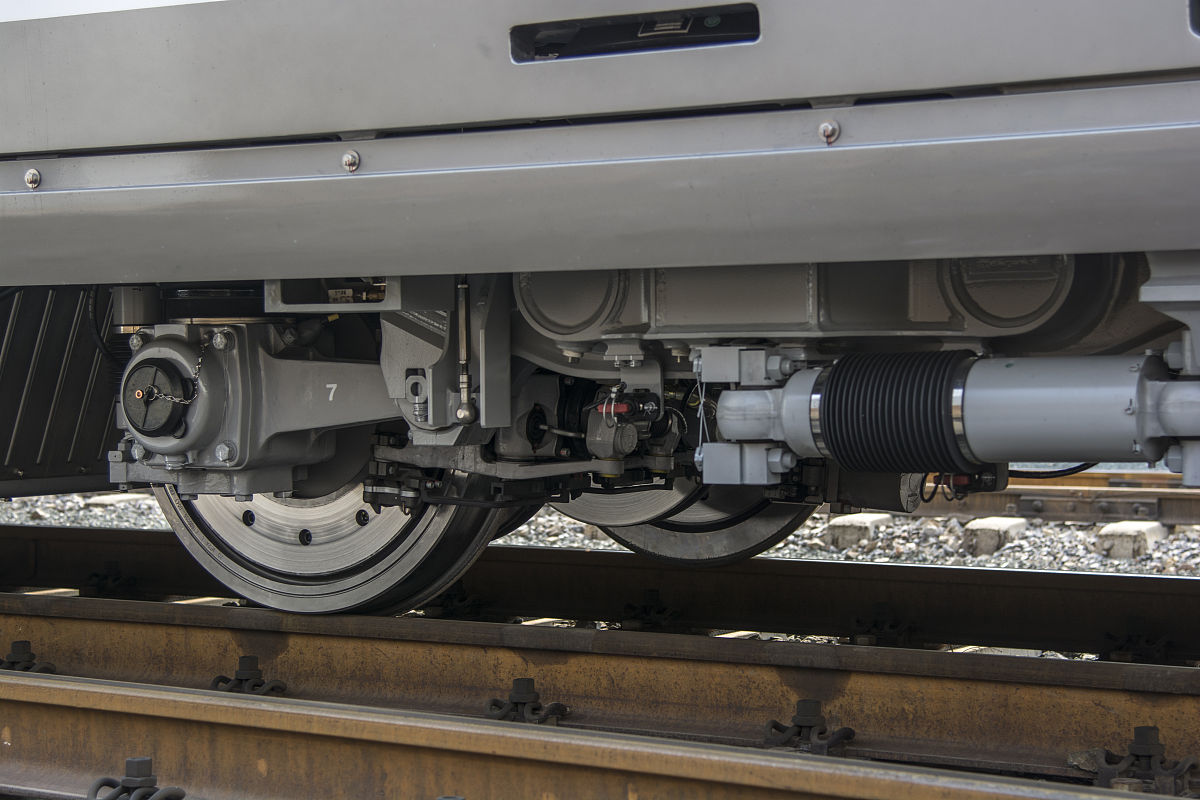
In order to explore the phenomenon of 'bogie' icing during high-speed train operation in cold regions, the Eulerian multiphase flow method was used to simulate the distribution of icing on the 'bogie' surface, and the influence of icing parameters on the amount and shape of icing in the 'bogie' region was studied. The results showed that the ability of the 'bogie' surface to capture snow particles and the condensation effect were positively correlated with the content of snow particles and liquid droplets. Icing mainly occurred in the windward area and lower position of the 'bogie', and became more pronounced with the increase of train speed, due to the increase in relative velocity between particles and airflow, making it difficult for particles to change their trajectory and enter the interior of the 'bogie'. Through the comparison study of multi-step and single-step methods, it was found that the single-step method ignored the change of flow field, affecting the collection of liquid droplets and snow particles, resulting in low icing amount and significantly different ice shapes. Therefore, updating the calculation grid in a timely manner can obtain more accurate results. After one hour of train operation, the braking and suspension devices were mostly covered with ice, posing a serious threat to driving safety. In addition, the ice on the 'bogie' surface hindered the movement of airflow, resulting in a local pressure difference at the bottom of the 'bogie' and an increase in train resistance.
原文地址: https://www.cveoy.top/t/topic/nu4v 著作权归作者所有。请勿转载和采集!