3D Human Body Reconstruction: A Comprehensive Review
Introduction
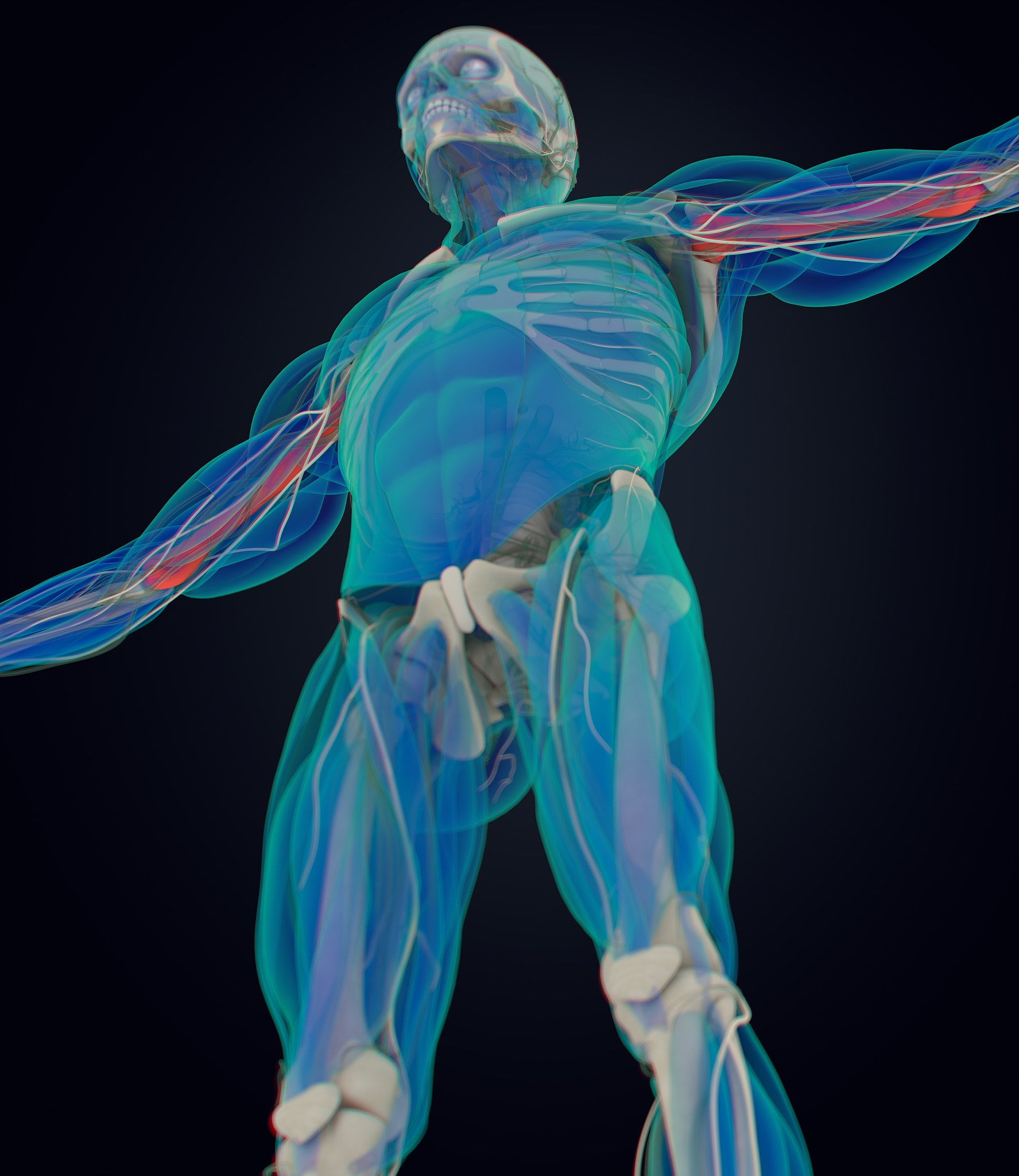
3D human body reconstruction is an emerging field that has garnered significant attention in recent years. The capability to generate accurate and lifelike 3D models of the human body holds substantial implications for various domains, including medicine, entertainment, and virtual reality. This review endeavors to provide a comprehensive overview of the current state of the art in 3D human body reconstruction, encompassing the diverse methods and techniques employed, as well as the inherent challenges and limitations associated with this technology.
Methods
Several methods are employed in 3D human body reconstruction, including photogrammetry, structured light scanning, and laser scanning. Photogrammetry entails capturing multiple photographs of an object from different perspectives and leveraging software to merge these images, thereby constructing a 3D model. Structured light scanning involves projecting a pattern of light onto an object and utilizing cameras to capture the distortion of the pattern, which is then used to generate a 3D model. Laser scanning utilizes a laser to scan an object and create a 3D model based on the measured distances.
Each method possesses its own advantages and drawbacks. Photogrammetry is relatively inexpensive and user-friendly, but the quality of the 3D model is contingent upon the quality of the photographs. Structured light scanning offers greater accuracy than photogrammetry but can be more costly and intricate. Laser scanning is the most precise method but also the most expensive and time-consuming.
Challenges and Limitations
Despite the potential benefits of 3D human body reconstruction, several challenges and limitations necessitate attention. One primary challenge is the requirement for high-quality data, particularly with regard to image resolution and lighting conditions. Inaccurate data can introduce errors into the 3D model, potentially affecting its accuracy and realism.
Another challenge lies in the need for specialized software and hardware to create and manipulate 3D models. This can be expensive and necessitate specialized training, potentially limiting the accessibility of this technology to certain industries and individuals.
Furthermore, ethical considerations must be taken into account, particularly concerning privacy and consent. The utilization of 3D human body reconstruction in medical contexts, for instance, raises questions surrounding patient consent and confidentiality. In entertainment and virtual reality contexts, the use of 3D models of real individuals can raise concerns regarding the use of likeness without explicit permission.
Applications
Despite these challenges and limitations, 3D human body reconstruction holds significant applications in various fields. In medicine, 3D models of the human body can be utilized for surgical planning and patient education. For example, a surgeon can employ a 3D model of a patient's heart to plan a complex surgical procedure, or a patient can utilize a 3D model of their own body to gain a deeper understanding of their condition and treatment options.
In entertainment and virtual reality contexts, 3D human body reconstruction can be employed to create more realistic and immersive experiences. For instance, a video game developer can leverage a 3D model of a real person's face and body to create a more realistic character, or a virtual reality developer can utilize a 3D model of a real location to create a more immersive environment.
Conclusion
3D human body reconstruction is an exciting and rapidly evolving field with substantial applications across various industries. While challenges and limitations are inherent to this technology, the potential benefits are significant. As technological advancements continue, it is likely that 3D human body reconstruction will become more accessible and widely adopted, with profound implications for medicine, entertainment, and virtual reality.
原文地址: https://www.cveoy.top/t/topic/nf6O 著作权归作者所有。请勿转载和采集!