Feed Efficiency Comparison: Artificial vs. Mulberry Leaf-reared Silkworms in the Fifth Instar
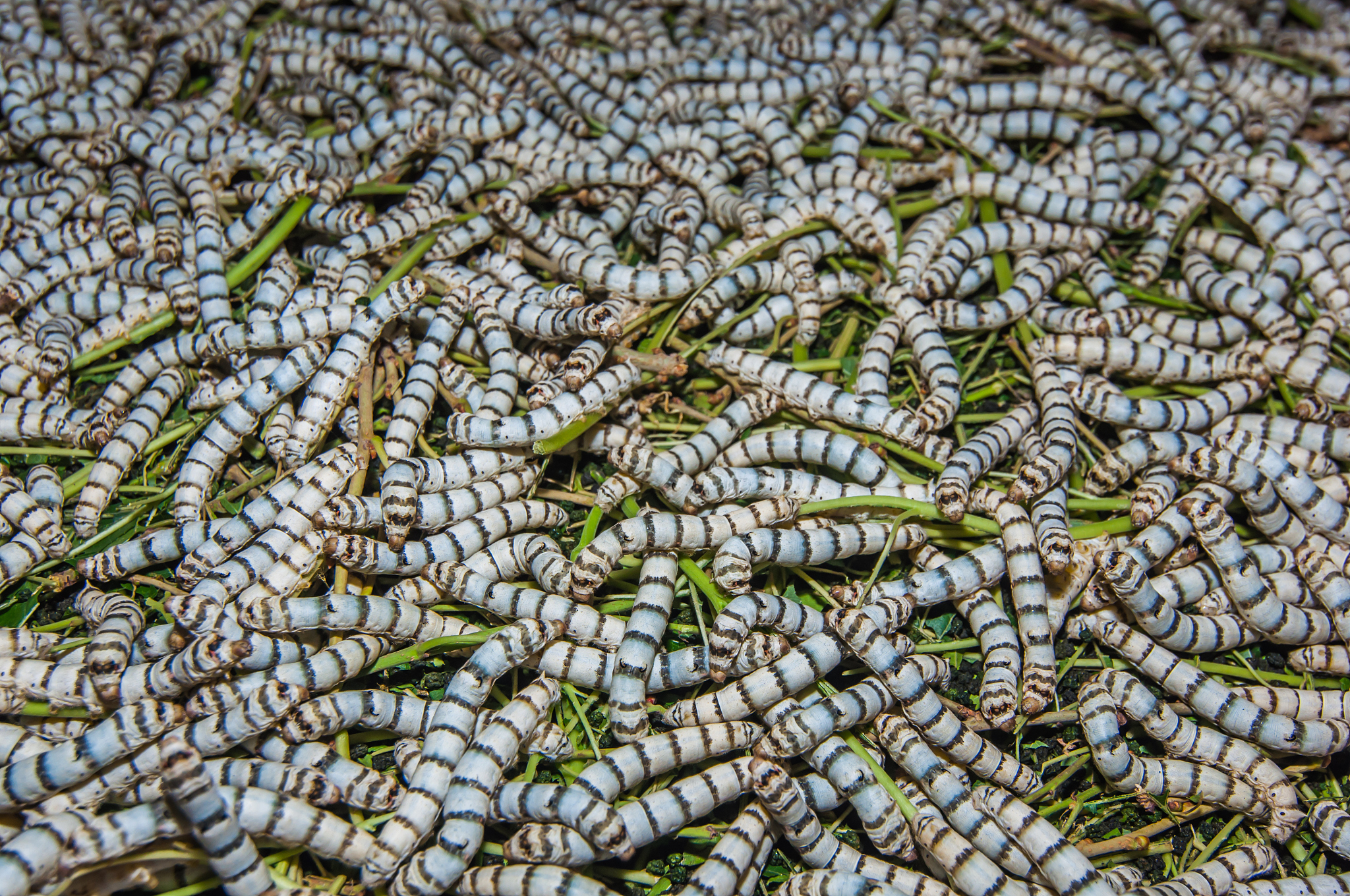
The difference in feed efficiency between artificial feed-reared silkworms in the fifth instar and those raised on whole mulberry leaves was investigated to provide technical support for improving artificial feed for silkworms and optimizing breeding techniques. The feed efficiency of different rearing methods in the fifth instar was compared using a 1-5 instar feed-rearing method, a 1-4 instar feed-rearing method with fifth instar mulberry leaf rearing, and whole mulberry leaf rearing. The conversion efficiency of whole cocoon production, cocoon layer conversion efficiency, and cocoon layer production efficiency in the fifth instar feed-reared and fifth instar mulberry leaf-reared groups were lower than those in the control group, with the former being 0.53%, 0.10%, 0.25%, and 0.08% lower than the control group, and the latter being 0.38%, 0.14%, 0.14%, and 0.06% lower than the control group. Compared with fifth instar mulberry leaf-rearing, the fifth instar feed-reared group had lower whole cocoon conversion efficiency, cocoon layer conversion efficiency, and cocoon layer production efficiency by 0.15%, 0.11%, and 0.02%, respectively, except for a 0.04% higher whole cocoon production efficiency. There is a certain gap in feed efficiency between artificially fed silkworms and those raised on whole mulberry leaves, and the feed efficiency of fifth instar artificial feed-reared silkworms is lower than that of whole mulberry leaf-reared silkworms.
原文地址: https://www.cveoy.top/t/topic/n8uk 著作权归作者所有。请勿转载和采集!