Welding Repair Operations: Best Practices and Requirements
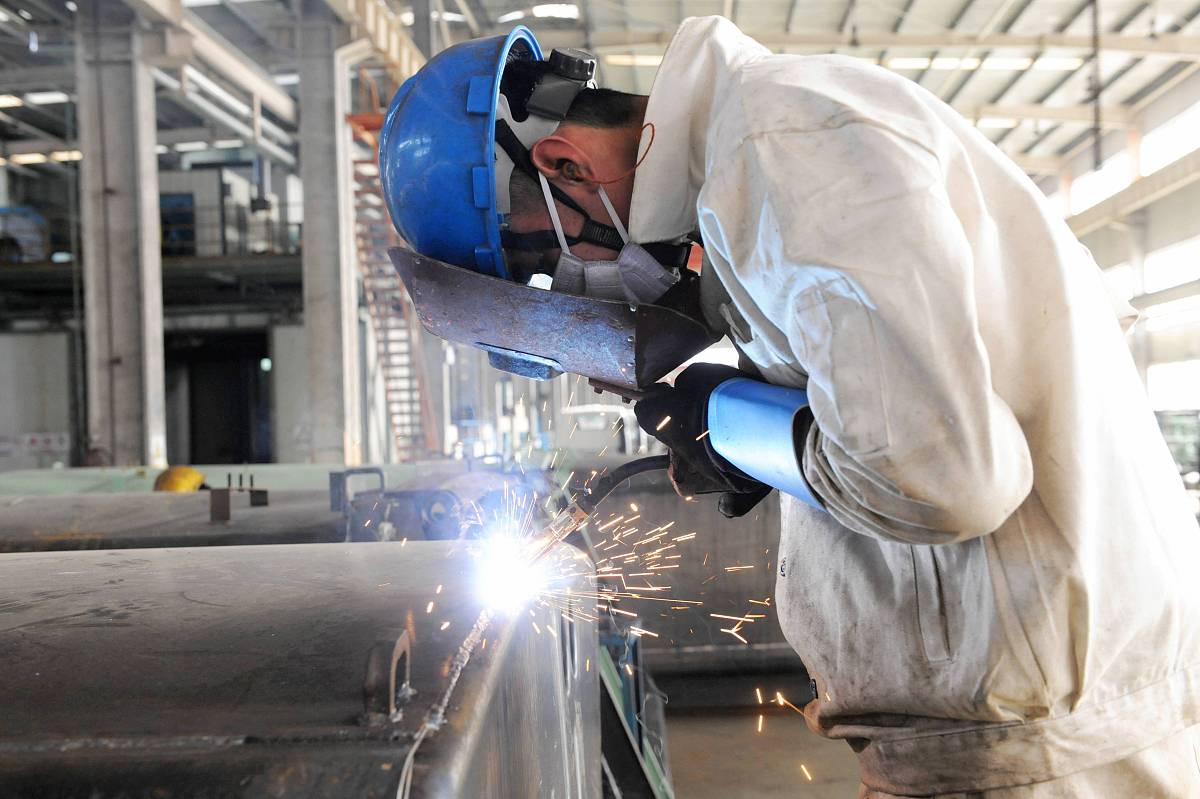
To ensure subsequent welding repair operations, a hot work permit will be obtained in advance from the Maritime Bureau. Scaffoldings will be erected, and the work surface will be cleaned. Once the requirements are met, qualified workers with appropriate certificates will carry out welding repair operations.
The processing of welding seam, assembly sequence, positioning accuracy, and assembly clearance of the components should comply with recognized process specifications. It is important to avoid forced assembly in order to minimize internal stress in the components. If there is a need to correct excessive welding seam bevel or assembly clearance, the correction method must be approved by the class surveyor.
Rust, oxide scale, oil, and debris in the welding seam bevel area should be removed and the area should be kept clean and dry. The number of tack welds should be minimized, and they should have sufficient height. For general strength steel, the length of tack welds should not be less than 30mm. The quality of tack welds should be equivalent to that of the welds. Defective tack welds should be cleaned before welding.
The excess height at the intersection of the butt welds should be ground flat, or holes should be drilled across the butt welds to ensure close contact between the components and the plate, thereby ensuring welding quality. If there are butt welds on the belly plate of continuous fillet welds, the butt welds should be welded first, and the excess height at the fillet welds should be ground flat before performing continuous fillet welding.
The specific replacement and repair range, as well as the steel grade and thickness, should adhere to the requirements of the classification society and ship drawings.
原文地址: https://www.cveoy.top/t/topic/laxb 著作权归作者所有。请勿转载和采集!