机场廊桥分配问题:优化算法实现最大化飞机停靠数量
算法优化:机场廊桥分配问题
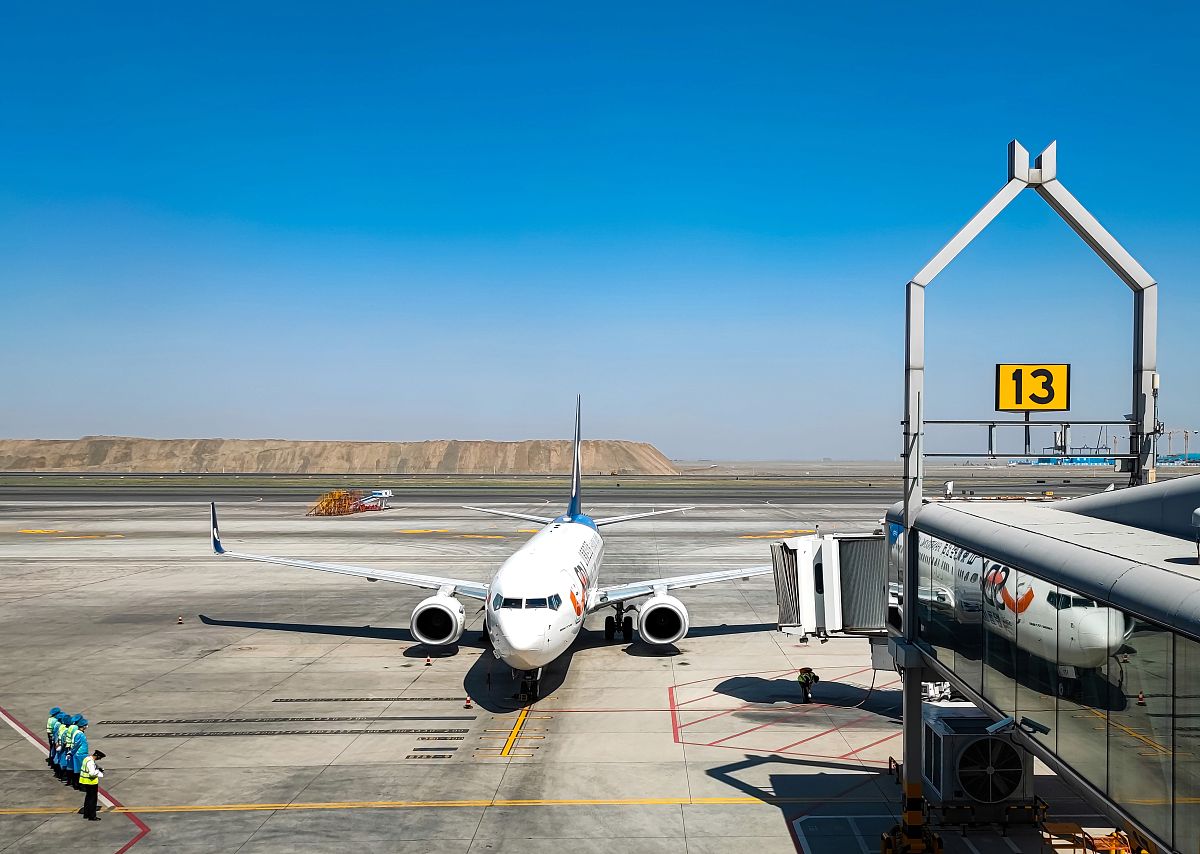
当一架飞机抵达机场时,可以停靠在航站楼旁的廊桥,也可以停靠在位于机场边缘的远机位。乘客一般更期待停靠在廊桥,因为这样省去了坐摆渡车前往航站楼的周折。然而,因为廊桥的数量有限,所以这样的愿望不总是能实现。
机场分为国内区和国际区,国内航班飞机只能停靠在国内区,国际航班飞机只能停靠在国际区。一部分廊桥属于国内区,其余的廊桥属于国际区。
L 市新建了一座机场,一共有 n 个廊桥。该机场决定,廊桥的使用遵循'先到先得'的原则,即每架飞机抵达后,如果相应的区(国内/国际)还有空闲的廊桥,就停靠在廊桥,否则停靠在远机位(假设远机位的数量充足)。该机场只有一条跑道,因此不存在两架飞机同时抵达的情况。
现给定未来一段时间飞机的抵达、离开时刻,请你负责将 n 个廊桥分配给国内区和国际区,使停靠廊桥的飞机数量最多。
输入描述
从文件 airport.in 中读入数据。 输入的第一行包含 3 个正整数 n, m1, m2 分别表示廊桥的个数、国内航班飞机的数量、国际航班飞机的数量。 接下来 m1 行是国内航班的信息,第 i 行包含 2 个正整数 a1,i, b1,i,分别表示一架国内航班飞机的抵达、离开时刻。 接下来 m2 行是国际航班的信息,第 i 行包含 2 个正整数 a2,i, b2,i,分别表示一架国际航班飞机的抵达、离开时刻。 每行的多个整数由空格分隔。
输出描述
输出到文件 airport.out 中。 输出一个正整数,表示能够停靠廊桥的飞机数量的最大值。
样例1
输入
3 5 4
1 5
3 8
6 10
9 14
13 18
2 11
4 15
7 17
12 16
输出
7
样例2
输入
2 4 6
20 30
40 50
21 22
41 42
1 19
2 18
3 4
5 6
7 8
9 10
输出
4
代码实现 (C++)
#include <iostream>
#include <vector>
#include <algorithm>

using namespace std;

struct Flight {
    int arrival;
    int departure;
    int type; // 1: domestic, 2: international
};

bool compare(Flight f1, Flight f2) {
    return f1.arrival < f2.arrival;
}

int main() {
    int n, m1, m2;
    cin >> n >> m1 >> m2;

    vector<Flight> domesticFlights(m1);
    vector<Flight> internationalFlights(m2);

    for (int i = 0; i < m1; i++) {
        cin >> domesticFlights[i].arrival >> domesticFlights[i].departure;
        domesticFlights[i].type = 1;
    }

    for (int i = 0; i < m2; i++) {
        cin >> internationalFlights[i].arrival >> internationalFlights[i].departure;
        internationalFlights[i].type = 2;
    }

    sort(domesticFlights.begin(), domesticFlights.end(), compare);
    sort(internationalFlights.begin(), internationalFlights.end(), compare);

    vector<int> gates(n); // gates[0]: domestic gates, gates[1]: international gates
    int maxGates = 0;
    int maxGatesCount = 0;

    int dIndex = 0;
    int iIndex = 0;

    while (dIndex < m1 && iIndex < m2) {
        if (domesticFlights[dIndex].arrival < internationalFlights[iIndex].arrival) {
            if (gates[domesticFlights[dIndex].type - 1] > 0) {
                gates[domesticFlights[dIndex].type - 1]--;
                maxGatesCount++;
            }
            gates[0]++;
            dIndex++;
        } else {
            if (gates[internationalFlights[iIndex].type - 1] > 0) {
                gates[internationalFlights[iIndex].type - 1]--;
                maxGatesCount++;
            }
            gates[1]++;
            iIndex++;
        }
        maxGates = max(maxGates, maxGatesCount);
    }

    while (dIndex < m1) {
        if (gates[domesticFlights[dIndex].type - 1] > 0) {
            gates[domesticFlights[dIndex].type - 1]--;
            maxGatesCount++;
        }
        gates[0]++;
        dIndex++;
        maxGates = max(maxGates, maxGatesCount);
    }

    while (iIndex < m2) {
        if (gates[internationalFlights[iIndex].type - 1] > 0) {
            gates[internationalFlights[iIndex].type - 1]--;
            maxGatesCount++;
        }
        gates[1]++;
        iIndex++;
        maxGates = max(maxGates, maxGatesCount);
    }

    cout << maxGates << endl;

    return 0;
}
算法解释
该算法使用贪心策略,按照飞机抵达时间顺序进行处理。对于每架飞机,如果其所属区域还有空闲的廊桥,则分配廊桥;否则停靠在远机位。
具体实现:
- 首先将国内航班和国际航班信息分别存储在两个数组中,并按抵达时间进行排序。
- 使用两个指针分别指向国内航班数组和国际航班数组的开头。
- 比较两个指针指向的航班的抵达时间,选择抵达时间较早的航班进行处理。
- 如果该航班所属区域还有空闲的廊桥,则分配廊桥,并更新廊桥数量和已停靠廊桥的飞机数量。
- 否则,该航班只能停靠远机位。
- 循环以上步骤,直到所有航班都被处理。
优化
该算法的时间复杂度为 O(m1 + m2),其中 m1 和 m2 分别表示国内航班和国际航班的数量。算法中使用两个指针分别指向国内航班数组和国际航班数组的开头,这样可以避免对整个数组进行遍历,从而提高效率。
总结
本题使用贪心算法,根据飞机抵达时间和廊桥可用情况,合理分配廊桥资源,实现效益最大化。该算法简单易懂,且时间复杂度较低,适用于解决类似的资源分配问题。
原文地址: https://www.cveoy.top/t/topic/kJ8 著作权归作者所有。请勿转载和采集!