六分钟的有关中国国画的英语模拟导游讲解词
Hello everyone, welcome to our tour of Chinese traditional painting. Today, I would like to introduce to you the beauty and significance of Chinese painting.
Chinese painting has a long history, dating back to prehistoric times. It has evolved from primitive paintings on pottery to the sophisticated art form we see today. The subject matter of Chinese painting ranges from the natural world to people, animals, and landscapes.
One of the most distinctive features of Chinese painting is the use of brush and ink on rice paper. The brush is held vertically and the ink is applied in a series of strokes that vary in thickness and intensity. This technique creates a unique texture and sense of movement in the painting.
Another important aspect of Chinese painting is the concept of “spirit resonance”. This means that the artist must have a deep understanding and connection with the subject matter in order to capture its essence and convey it to the viewer. This idea is reflected in the use of symbolism and metaphors in Chinese painting.
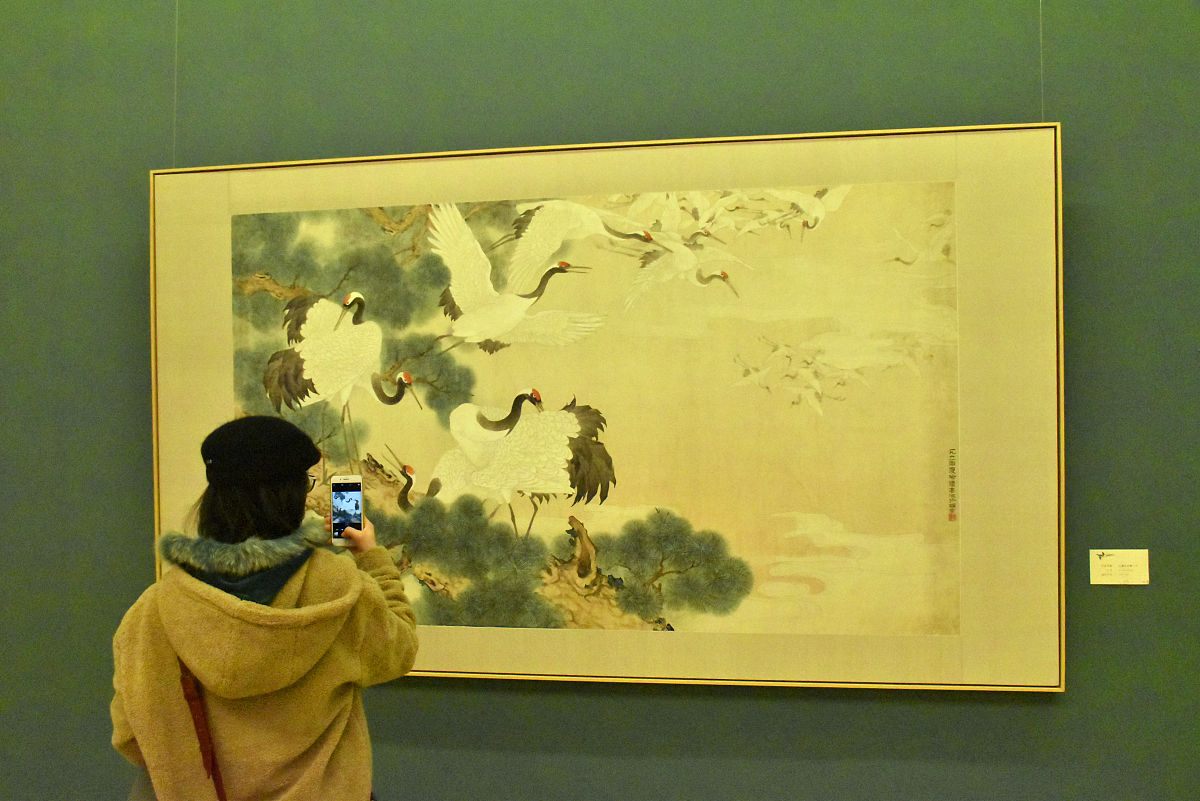
There are several different styles of Chinese painting, including Gongbi (meticulous) and Xieyi (freehand). Gongbi is characterized by its detailed and precise brushstrokes, while Xieyi emphasizes spontaneity and expression. Both styles have their own unique beauty and appeal.
Chinese painting also has a strong connection to calligraphy. Many painters also practice calligraphy, and the two art forms often influence each other. The use of calligraphic elements in painting, such as brushstrokes and characters, adds an extra dimension to the artwork.
In conclusion, Chinese painting is a rich and complex art form that has a deep cultural significance. Its beauty and elegance have captivated people around the world for centuries. I hope you have enjoyed learning about Chinese painting today and will appreciate it even more when you see it in person. Thank you for joining me on this tour.
原文地址: https://www.cveoy.top/t/topic/bx7o 著作权归作者所有。请勿转载和采集!